About Palace Walk
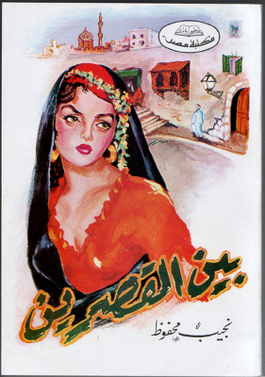
Palace Walk, known in Arabic as Bayn al-Qasrayn, is the celebrated screen adaptation of the first volume of Naguib Mahfouz's landmark Cairo Trilogy, one of the towering achievements of modern Arabic literature. Set in Cairo in the years around the First World War and the Egyptian national awakening, the story follows the household of the merchant Ahmad Abd al-Gawwad, a stern and devout patriarch whose private indulgences stand in sharp contrast to the rigid discipline he imposes on his wife and children. The drama unfolds within the narrow streets and old quarters of the city, capturing a world poised between tradition and the stirrings of change.
At the heart of the narrative is the tension between authority and desire, duty and freedom, as the members of the family navigate the strict expectations of their father against their own private hopes. The patient, deeply observed storytelling gives weight to ordinary domestic life, while larger historical currents, including the popular uprising against colonial rule, press in upon the household and reshape its fortunes. Through the experiences of the children and the long suffering of the mother, the work charts the slow loosening of an old order.
The adaptation became a cornerstone of Egyptian dramatic culture, prized for its faithfulness to Mahfouz's psychological depth and its rich portrait of Cairo society. Its themes of family, faith, hypocrisy, and national identity have given it enduring resonance across the Arab world, and it remains a touchstone for discussions of how literature and screen drama can illuminate the inner life of a nation during a moment of profound transformation.